Happy Glass
New Games

What Is Happy Glass
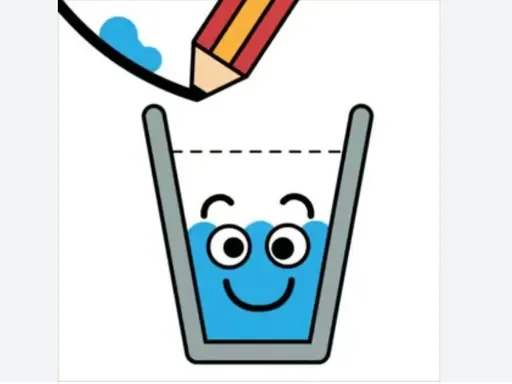
Happy Glass is a physics puzzle where you draw lines to guide water into a sad empty cup, use gravity wisely, and solve short levels with clean efficient ideas. Each level gives you a partial scene with platforms, gaps, moving objects, or awkward angles. Your job is to draw a line that changes the path of the water so more of it reaches the target instead of spilling away. That premise is easy to understand in seconds, but the challenge becomes deeper once the layouts start asking for timing, restraint, and cleaner shapes.
The game works well because it blends drawing and problem solving without asking for fast reflexes. You are not steering the water directly. You are building a temporary solution, then watching gravity and momentum test it. Some lines act like ramps, some act like dams, and some need to do both in the same move. A level can look impossible until you notice one tiny edge where a better curve or a shorter support changes everything.
How to Play It in Your Browser
Browser play keeps the core idea intact. When the level loads, you see the faucet, obstacles, and the glass waiting somewhere below or to the side. Click and drag with your mouse, or use a finger on touch devices, to draw one or more lines before or during the water flow depending on the version. Once the water starts moving, your drawing becomes part of the level. The best shapes do not fight physics. They cooperate with it.
On desktop, the experience is immediate because there is no installation step between the idea and the puzzle. If you want to see the dedicated web version of Happy Glass, the structure is the same: you load a stage, study the empty spaces, sketch a path, and then see whether your plan actually delivers enough water into the cup.
Controls and What They Mean in Practice
The controls are minimal, but each small input matters. Click, hold, and drag to draw. Release to place the line. In some levels you can add multiple strokes, while in others efficiency matters because shorter drawings help you earn a better rating. The line is not just visual decoration. It becomes a solid surface, so its thickness, angle, and endpoints can decide whether water slides, pools, or escapes.
A common beginner mistake is drawing a huge wall because it feels safer. Large shapes often create new problems. They can block the faucet, cause water to gather in the wrong pocket, or send the stream into a bounce you did not anticipate. Shorter lines are usually easier to control, especially when you use existing platforms as part of the route. Think of your drawing as a small adjustment to the level rather than a complete replacement for it.
Practical Tactics for Cleaner Solutions
One reliable tactic is to build funnels instead of barriers. A funnel shape guides motion while preserving speed. A flat barrier stops motion, which can cause overflow or random splash behavior. When the level includes narrow ledges or pegs, use them as anchors for a sloped line that collects stray droplets and channels them forward. You usually need less drawn material than you first assume.
It also helps to read the level in terms of loss points. Where can water spill off-screen? Where can it split into two weak streams? Where can it hit a corner and scatter? If you answer those questions before drawing, your first attempt becomes much more deliberate. Happy Glass often looks like a drawing game, but strong play comes from predicting waste, not from drawing fancy shapes.
Common Errors That Make Easy Levels Harder
The first mistake is overengineering. If a stage can be solved with one slope, adding a second and third stroke often introduces instability. The second mistake is drawing directly under the faucet with no room for flow. Water needs space to gather direction. The third mistake is ignoring the glass position itself. Some cups are tilted, partly blocked, or placed near edges, which means the final approach angle matters as much as the route before it.
If you are chasing stars or a high completion grade, remember that elegance usually beats force. Store descriptions emphasize that many levels reward simpler answers, and that matches the way the puzzle feels in play. A compact line that uses the terrain well is easier to repeat and easier to improve.
Release Context and Why the Game Lasted
Happy Glass arrived during the period when mobile physics puzzles were competing to explain themselves in a single screenshot. Its premise succeeded because the emotional goal was obvious: the glass is sad, the water is nearby, and your line can change the outcome. That immediate readability helped it reach a broad audience far beyond dedicated puzzle players.
The game is also unusually durable for such a small concept. Apple App Store version history shows ongoing releases well after the original launch window, and Google Play still listed the game as updated on July 15, 2025 when reviewed for this writeup. That kind of maintenance suggests the formula remained popular enough to keep supporting, which makes sense. A line-drawing puzzle can produce many level variations without changing the core controls players already understand.
FAQ
What is the goal in Happy Glass?
The goal is to draw lines that guide enough water into the glass to fill it past the required level and make the glass smile.
Do I need quick reflexes to play well?
Not usually. Most levels reward planning, observation, and efficient drawing more than speed, especially in standard browser stages.
Why does my solution fail even when water reaches the cup?
Many stages require enough water to remain in the glass, so splashing some droplets inside is not enough if too much spills away first.
Is it better to draw big shapes or short lines?
Shorter lines are often better because they are easier to control, interfere less with the level, and usually create cleaner water flow.
Can I improve by replaying old levels?
Yes. Replaying earlier stages is useful because you can compare a workable solution with a cleaner one and learn how little drawing is actually necessary.
Does the browser version feel different from the mobile version?
The core puzzle logic is the same, but the browser version is especially convenient for quick sessions because you can start instantly without installing anything.
A Puzzle About Small Decisions
Happy Glass remains compelling because it turns tiny drawings into visible consequences. A slight angle change can save a full attempt, and one unnecessary stroke can ruin a level that was almost solved. That clarity makes every retry feel informative instead of random. If you enjoy puzzles where observation matters more than speed, this is an excellent browser game to return to for short, focused sessions.
Comments
Loading comments…