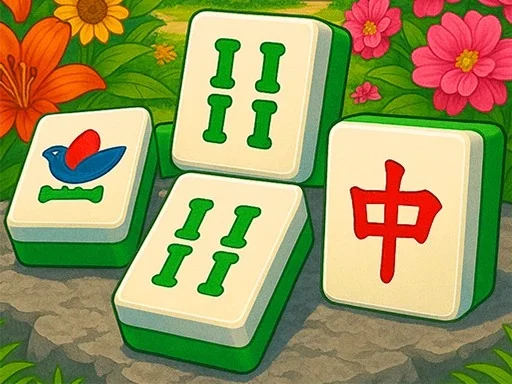
Mahjong Garden
New Games
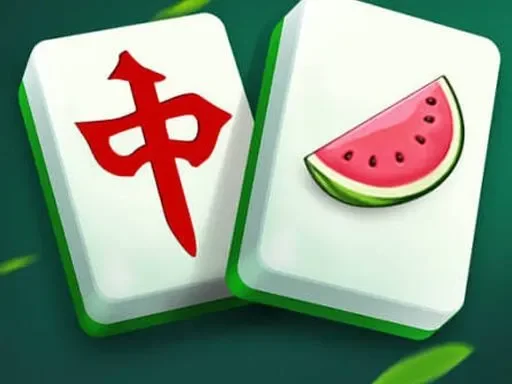



Where Calm Matching Meets Real Decision Making
Mahjong Garden is a browser mahjong solitaire puzzle where you match free tiles, clear layered boards, and enjoy calm strategy on desktop or mobile. It feels welcoming right away because the controls are easy to understand, yet the board quickly asks for more than quick reactions. Each move changes what is exposed, what remains trapped, and what kind of path you are building for the rest of the round.
That is why this style of game stays popular. You are not dealing with table rules, hand scoring, or draw-and-discard tactics. Instead, you are solving a layered visual puzzle. A pair that looks harmless now might lock away a useful symbol later, so the game rewards observation and patience.
The garden theme gives the experience a softer tone. Even when a board becomes tight, the flow remains thoughtful rather than frantic.
What You Are Actually Doing on Each Board
The basic loop is easy to learn
In Mahjong Garden, your goal is to find two matching tiles and remove them as a pair. The important rule is that not every visible tile is playable. A tile normally counts as free only when nothing is resting on top of it and at least one of its long sides is open. If both sides are blocked, or another tile is stacked above it, you must work around that obstacle before you can use it.
That rule turns a simple matching exercise into a layered puzzle. You are not just asking, “Do I see two flowers?” or “Do these bamboo tiles match?” You are also asking which pair opens the board more effectively. A strong move reveals hidden faces, opens a closed edge, or frees a symbol family that was stuck under the upper layer.
Why some matches matter more than others
It is tempting to click the first available pair you see, especially when the layout begins with lots of open space. But the best choice is often the pair that creates future freedom. If one match only removes two edge tiles while another exposes a buried stack in the middle, the second option is usually the smarter investment. Mahjong solitaire is often won by move quality, not by move speed.
Many boards also include more than two copies of the same symbol. Using the wrong pair too early can leave the final copies blocked on opposite sides of the layout, so a quick scan before each selection helps.
How To Play It Smoothly in Your Browser
You can play Mahjong Garden directly on this site without installing anything. Let the page load, click or tap into the game frame, and begin matching tiles. Sessions can be as short or as long as you want.
On desktop, a mouse makes it easier to compare distant parts of the board. On a phone or tablet, landscape mode is usually the most comfortable choice because it gives layered stacks more breathing room. Accuracy matters more than speed, and a calm pace usually leads to better clears.
Controls and practical play habits
The control scheme stays simple: click or tap one free tile, then click or tap its matching partner. If both tiles are legally available, the pair disappears. If nothing happens, one of the tiles is probably still blocked, or the symbols are not part of the same match set. Because of that, it helps to train your eyes to check tile freedom before committing.
A useful habit is to work from the highest layer and the outer edges inward. Top tiles and side lanes often hide the key to the rest of the puzzle. It also helps to pause every few moves and rescan the board, because a pair that was impossible moments ago may suddenly become the best move available.
Common Mistakes That Make a Relaxing Board Feel Hard
Clearing “easy” pairs without a plan
The most common beginner mistake is treating every open pair as equally good. In reality, some pairs only make the board thinner, while others actually unlock it. If you spend too many moves removing convenient edge matches that do not expose anything important, the remaining structure can become awkward and closed.
Ignoring blocked families of tiles
Another problem is failing to track where the other copies of a symbol are located. If one dragon tile is open while the others are buried, that open copy becomes strategically important. Paying attention to tile families helps you avoid a late-game situation where the last two matching pieces can be seen but not reached.
Rushing because the board looks almost solved
Many rounds become most dangerous near the end. Once the layout is smaller, every remaining move matters more. When the board looks almost finished, slow down instead of speeding up, because that is where careful reading pays off most.
Why Mahjong Garden Feels Familiar Yet Timeless
Mahjong itself traces back to 19th-century China, but online mahjong solitaire followed a different path. The single-player tile-matching format became widely known through computer versions and later spread across browser portals because it was instantly understandable and endlessly replayable. That is the tradition Mahjong Garden belongs to: a solo puzzle format that borrows the visual language of classic mahjong tiles and turns it into a clean, screen-friendly challenge.
Public browser listings for this title place it among modern online mahjong games that work across desktop and mobile devices. You can start in seconds, learn the rules quickly, and still spend plenty of time improving your pattern reading and move discipline.
Building a Better Strategy Over Time
If you want to clear boards more consistently, stop thinking only in terms of matches and start thinking in terms of access. Which move opens the center? Which pair frees a side lane? Which symbol family is in danger of getting stranded? Those questions matter more than raw visibility.
It also helps to use a repeatable scan pattern. Some players check the top row first, then sweep left to right through the exposed edges. Others rotate around the board in a circle. The exact method matters less than consistency, because a stable pattern makes it easier to remember where important tiles are hiding.
FAQ
Is Mahjong Garden the same as traditional mahjong?
No. Traditional mahjong is usually a multiplayer game built around drawing, discarding, and forming scoring hands. Mahjong Garden is a solo mahjong solitaire puzzle where you remove matching pairs from a fixed layout.
How do I know whether a tile is free?
A tile is generally free when no other tile is covering it and at least one long side is open. If both sides are blocked or another tile sits on top, that tile cannot be matched yet.
What should I focus on first when a board begins?
Start by checking the top layer and the far outer edges. Those tiles usually control which deeper pieces can be opened next, so early decisions there have the biggest effect on the rest of the board.
Why do I get stuck even when I can still see many tiles?
Seeing a tile is not the same as being able to use it. In mahjong solitaire, many visible tiles remain blocked by neighbors or upper layers. Most stuck boards happen because earlier moves did not create enough future access.
Can I play Mahjong Garden on mobile?
Yes. Browser mahjong games like this are commonly designed for desktop and mobile play. On smaller screens, landscape orientation usually makes tile layouts easier to read and reduces accidental taps.
Does the game reward speed or careful planning?
Careful planning matters more. Fast clears can feel satisfying, but consistent wins usually come from choosing matches that reveal hidden tiles, protect open edges, and keep future pairs reachable.
Comments
Loading comments…