
Mahjong Tile Club
New Games

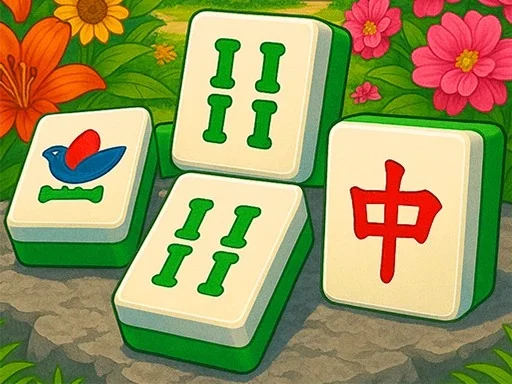




A Calm Puzzle With Just Enough Pressure
Mahjong Tile Club is a browser friendly mahjong solitaire game built around one clear objective: remove matching pairs of free tiles until the layout disappears. The idea is easy to grasp, yet the board keeps changing because tiles are stacked in layers, outer lanes open and close, and each move changes what becomes available next. That balance of clarity and small strategic choices is the heart of the experience.
Unlike traditional four player mahjong, this is a solo puzzle. You are not building hands or learning table scoring rules. You are reading patterns, spotting safe pairs, and trying to clear the board efficiently. The browser version also adds score chasing, combo rewards, helpful tools, and theme options, so the classic formula feels a little more modern.
If you enjoy games that reward concentration without demanding frantic speed, Mahjong Tile Club fits neatly into that space. It works as a short break puzzle, but it also supports longer sessions when you want a cleaner clear and a better score.
How a Round Unfolds
Reading the board before your first move
Each stage opens with a layered arrangement of tiles. You will see familiar bamboo, circles, characters, dragons, flowers, and other decorative symbols, while some themes swap in alternative art. Only a limited number of tiles are actually playable, though. A tile is free when nothing is resting on top of it and at least one long side is open. That simple rule shapes the entire puzzle.
A strong first habit is to scan the top layer and the far left and right edges before clicking. Those outer tiles often unlock the pieces buried in the middle. Because the puzzle is about access as much as recognition, the best move is not always the first pair you notice.
Score, combos, and board flow
Mahjong Tile Club rewards clean play with points. Consecutive matches can build combo bonuses, and some browser descriptions also mention a perfect combo finish where the remaining pairs resolve automatically if you keep the chain alive long enough. That system lets you play casually or treat each board like a small optimization challenge.
Missed clicks matter too. In many rounds, selecting the wrong tile costs points, so accuracy is part of performance. The best runs usually come from a calm rhythm: scan, compare, unlock, then move on without rushing.
Playing Smoothly in Your Browser
On this site, Mahjong Tile Club runs directly in the game frame, so there is nothing extra to install. Let the page finish loading, click or tap once inside the game area to focus it, and start matching. Desktop players usually get the clearest view in fullscreen, while mobile players may prefer landscape orientation.
If the game seems sluggish, refresh the tab and close a few heavy background pages. Since this is a visual puzzle, readability matters more than reaction speed. A stable screen and a comfortable view will help more than frantic clicking.
The controls stay simple
Click or tap one free tile, then click or tap its matching partner. If both are legally available, the pair disappears. Hint and shuffle tools are commonly placed near the board, and some builds also include undo. These features support decision making, not replace it.
Better Habits Than Random Pairing
Open the structure, not just the easiest pair
One common beginner mistake is clearing whatever match is visible first. That feels productive, but it can trap useful tiles under the remaining layers. A stronger approach is to value pairs that expose hidden rows or free blocked corners. When two options look similar, favor the one that opens the board wider.
Protect future matches
Tiles often appear more than twice across a level. When you use one pair, you are also deciding which matching copies remain for later. If one option sits on the edge and another sits deep in the middle, leaving the edge tile for later can be risky because it may keep an important route blocked. Thinking a move or two ahead prevents many dead ends.
Use helpers as learning tools
Hints and shuffles are most useful when they teach you something. If you activate a hint, notice why that pair was available. If you shuffle, study how the new arrangement changes your options. Over time, those tools become less of a rescue button and more of a way to sharpen your board reading.
Where This Version Fits in the Mahjong Puzzle Lineage
Mahjong Tile Club belongs to the long running mahjong solitaire branch rather than the traditional tabletop game. Browser portal listings describe it as an HTML5 release from Bravestars Games, with public listings around December 2025. The game feels designed for modern quick access play, where players want a calm puzzle they can launch instantly on desktop, mobile, or tablet.
What helps it stand out is not a complicated rule twist. It is the packaging. Online descriptions highlight changing backgrounds such as bamboo scenes, koi pond visuals, and cherry tree settings, along with alternate tile themes and a reward loop tied to points, mystery chests, and utility tools. The core stays classic while the presentation leans cozy and approachable.
When the Board Starts Fighting Back
Most failed rounds come from three problems: clearing symmetrical pairs without thinking about access, ignoring deep stacks until too late, or burning helpers before understanding the board. If you feel stuck, stop searching only for matching symbols and start searching for freedom. Which move opens a buried layer? Which side lane has become narrow? Which tile family still has enough visible copies to keep your path alive?
That shift in perspective is usually enough to recover. The game is less about memorizing every tile and more about managing space. Once you treat open edges as resources, the puzzle becomes much easier to control.
FAQ
Is Mahjong Tile Club the same as traditional mahjong?
No. Traditional mahjong is usually a multiplayer table game with hands, draws, discards, and scoring combinations. Mahjong Tile Club is a solo mahjong solitaire puzzle where you remove matching pairs from a layered layout.
How do I know whether a tile is playable?
A tile is playable when no tile is covering it and at least one of its long sides is open. If it is trapped under another tile or blocked on both the left and right sides, you cannot remove it yet.
What should I do if I cannot find a match?
Start by checking the outer edges and the top layer again, because many missed pairs hide there. If the board still looks locked, use a hint or shuffle if the current version provides those tools, then study the new options before making your next move.
Does the game reward careful play or fast play?
Both matter, but careful play usually matters first. The score rises through successful matches and combos, yet careless clicks can cost points and close off the board. A smooth, accurate rhythm is usually better than rushing.
Can I play Mahjong Tile Club on phone and desktop?
Yes. Browser listings for the game describe it as an HTML5 release that works across desktop, mobile, and tablet. On smaller screens, landscape mode often makes the tile layout easier to read.
Why do experienced players clear boards more consistently?
They usually focus on unlocking structure instead of removing random visible pairs. Strong players protect open edges, think a move ahead, and use hints or shuffles only after understanding why the board became difficult.
Comments
Loading comments…